-
-
-
Mumbai, Maharashtra, India.
Fastener
Fastener
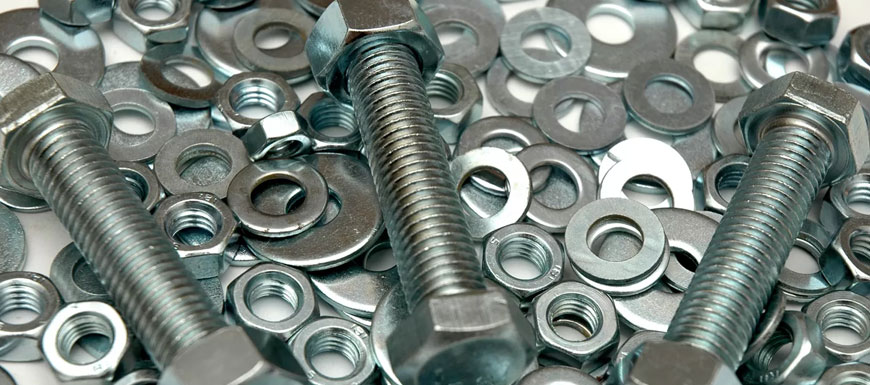
A fastener is a hardware device that mechanically joins or affixes two or more objects together. Fasteners are widely used in construction, automotive, aerospace, and manufacturing industries for their ability to provide secure and detachable connections. Common types of fasteners include bolts, screws, nuts, washers, and rivets. They are available in various sizes, grades, and thread types to meet specific application needs, and are typically made from materials such as carbon steel, stainless steel, alloy steel, and brass.
Fasteners play a crucial role in ensuring the structural integrity and safety of mechanical assemblies. Their properties such as tensile strength, corrosion resistance, and load-bearing capacity are critical in choosing the right type for a given application. Many fasteners are also available with special coatings or finishes like zinc plating, galvanizing, or black oxide to enhance their performance in harsh environments. Due to their versatility and ease of installation, fasteners are an essential component in both permanent and temporary joints across a wide range of industries.
Fasteners Specifications
| Specification | Description |
|---|---|
| Size Range | M2 to M100 / ¼” to 4” |
| Thread Types | UNC, UNF, Metric Coarse/Fine, BSW, BSF |
| Length | Up to 1000 mm or customized |
| Head Types | Hex, Socket, Allen, Button, Countersunk, Pan |
| Coating | Zinc Plated, Hot Dip Galvanized, PTFE, Black Oxide |
| Standards | ASTM, DIN, ISO, JIS, BS, SAE |
| Testing | Hardness, Tensile, Proof Load, Dimensional Inspection |
Nuts
A nut is a type of fastener with a threaded hole, typically used in conjunction with a bolt or screw to securely fasten multiple parts together. Nuts are essential components in a wide range of mechanical and structural applications, offering strong, removable joints. They come in various shapes and sizes, with the most common being the hex nut, which has six sides for easy wrench grip. Depending on the application, nuts may be made from carbon steel, stainless steel, alloy steel, or even non-ferrous metals such as brass or aluminum.
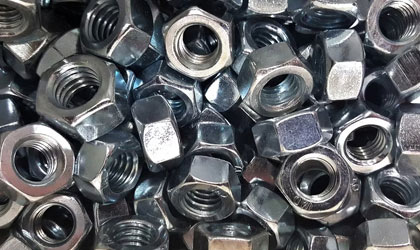
Nuts are available with different thread types including metric, UNC, UNF, and BSW, and may feature coatings like zinc plating, hot dip galvanizing, or PTFE for enhanced corrosion resistance. Specialized types like lock nuts, flange nuts, wing nuts, and cap nuts are designed for specific performance needs, such as vibration resistance or tool-free installation. Due to their versatility, strength, and ease of use, nut fasteners are widely used across the automotive, construction, machinery, and oil & gas industries.
Bolts
A bolt is a type of mechanical fastener with external threads, typically used in conjunction with a nut to join multiple components together in a secure and detachable manner. Bolts are widely used in construction, machinery, automotive, and industrial equipment where strong and reliable fastening is required. They are available in various diameters, lengths, and thread types including metric, UNC, and UNF. Common types of bolts include hex bolts, carriage bolts, flange bolts, and eye bolts, each designed for specific applications and load conditions.
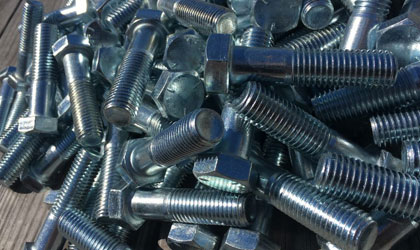
Bolts are manufactured from materials like carbon steel, stainless steel, alloy steel, and specialized nickel alloys for high-performance environments. Surface treatments such as zinc plating, hot-dip galvanizing, and PTFE coating are often applied to enhance corrosion resistance and durability. High-strength bolts conform to standards like ASTM, DIN, and ISO, ensuring consistent performance in structural and high-pressure applications. Their combination of load-bearing capacity, reusability, and ease of installation makes bolts a critical component in countless mechanical and structural assemblies.
Washers
A washer is a thin, flat, and typically round plate with a hole in the center, used in conjunction with bolts, screws, or nuts to distribute the load of a fastener. Washers help prevent damage to the surface being fastened, reduce the risk of loosening due to vibration, and provide a smooth bearing surface. They are essential in both structural and mechanical applications, improving the longevity and stability of the assembly. Common types include flat washers, spring washers, and lock washers, each serving a specific function depending on the fastening requirements.

Washers are manufactured from materials like stainless steel, carbon steel, brass, and nylon, and can be coated with finishes such as zinc plating, hot dip galvanizing, or PTFE for enhanced corrosion resistance. They conform to various international standards such as DIN, ISO, ASTM, and BS to ensure quality and compatibility. Washers play a critical role in high-load environments like automotive, construction, oil and gas, and machinery assembly, where they help maintain fastener tension and protect joint integrity under dynamic conditions.
Screw
Screw fasteners are essential mechanical components used to securely join two or more materials together. They are made from durable materials like stainless steel, carbon steel, brass, and titanium, offering strength and reliability for a wide range of applications. Common types of screws include machine screws, wood screws, self-tapping screws, and set screws. These fasteners can be coated with protective finishes such as zinc plating, black oxide, or chrome to enhance corrosion resistance and improve their performance in harsh environments. Screws are designed to meet international standards like ISO, DIN, ANSI, and BS to ensure quality, compatibility, and precision in various industrial sectors.

Screws play a crucial role in numerous applications, particularly in industries like automotive, construction, electronics, and machinery assembly. They provide high clamping force and are ideal for both static and dynamic loads. With their threaded design, screws offer excellent grip and holding power, allowing them to maintain secure connections under vibration, heat, and movement. From structural assemblies to precision components, screws are key to ensuring reliability, durability, and safety in complex systems.
Stud Bolts
Stud bolts are essential fastening components used to secure heavy-duty applications where high tensile strength and reliability are required. Typically made from carbon steel, stainless steel, alloy steel, and other high-strength materials, stud bolts provide superior strength and durability. These fasteners often feature coatings like zinc plating, hot dip galvanizing, or PTFE to enhance corrosion resistance and protect against environmental wear. They are available in various sizes, lengths, and thread patterns, including UNC (Unified National Coarse) and UNF (Unified National Fine) threads, making them highly versatile for different applications. Stud bolts conform to international standards such as ISO, ASTM, and DIN for consistency and quality assurance.
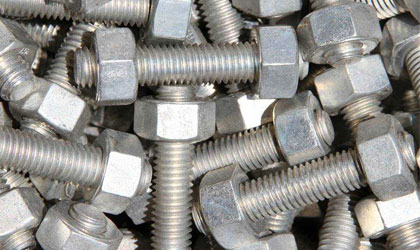
Stud bolts are widely used in critical industries like oil and gas, construction, marine, and power generation due to their ability to handle high-pressure and high-temperature environments. They are commonly utilized in flange connections, machinery assemblies, and structural joints, where their dual-threaded design allows for easy installation and disassembly. The ability to maintain consistent pressure and tension in high-load applications makes stud bolts indispensable for maintaining the integrity of critical systems. Their reliable performance under dynamic conditions helps ensure safety and operational efficiency in demanding environments.